Facebook Reels In-stream
Ads Improvements

Meta · 2025

Pushing in-stream ad format innovation in Facebook Reels — redesigning mid-roll and post-roll experiences with a new indicator system and ad formats that improve conversion and engagement while keeping viewer disruption low.

Role
Lead Product Designer
Focus
Monetization · Video surface

The problem

  • In-stream ads are the most disruptive format on Reels — they cut into videos mid-flow, breaking the viewing rhythm at the moment people are most absorbed
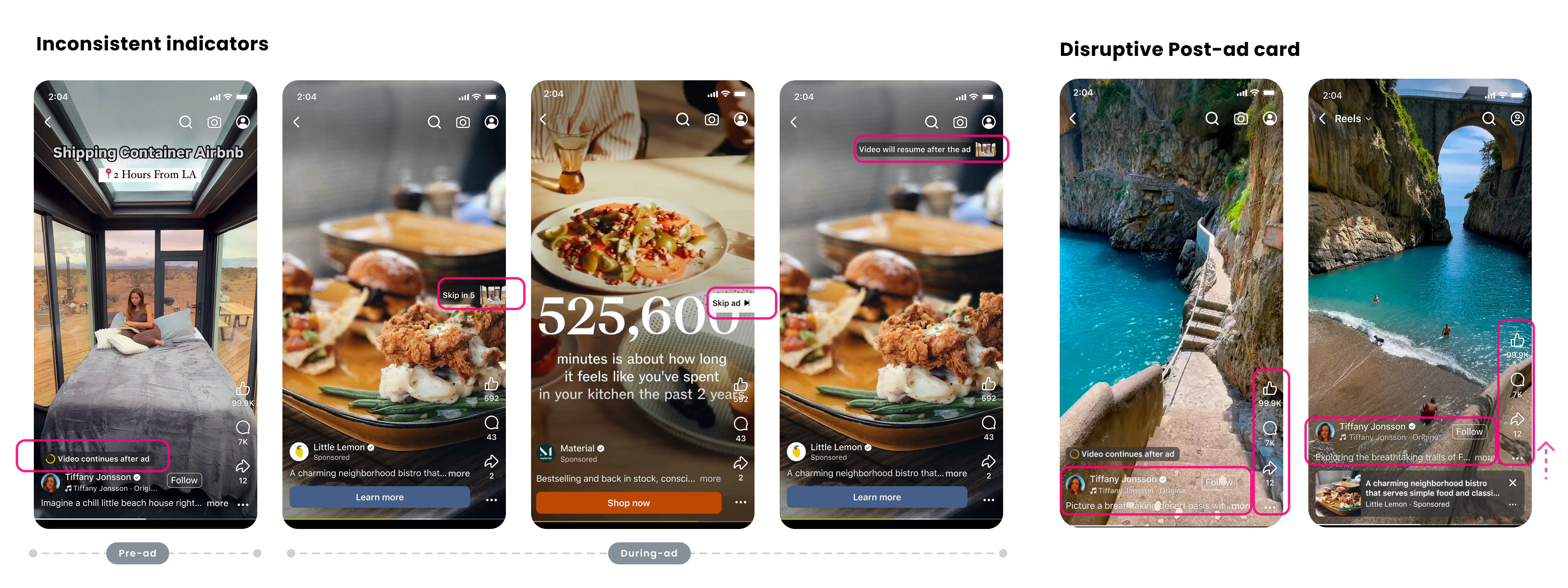
  • Inconsistent ad indicators across skippable and non-skippable formats left viewers with no way to predict what came next, making every ad feel like a surprise interruption
  • Viewers immediately look for the skip button, which tanks engagement and kills conversion

The core tension: ads need to perform for businesses without feeling like a punishment for people just trying to watch a video.
The hypothesis

We hypothesized that by isolating the post-ad deferred card into a standardized, elevated single-card footprint and freezing the underlying organic video, we could protect a high-performing conversion window while eliminating interaction safety issues.

The approach

1. A consistent indicator system

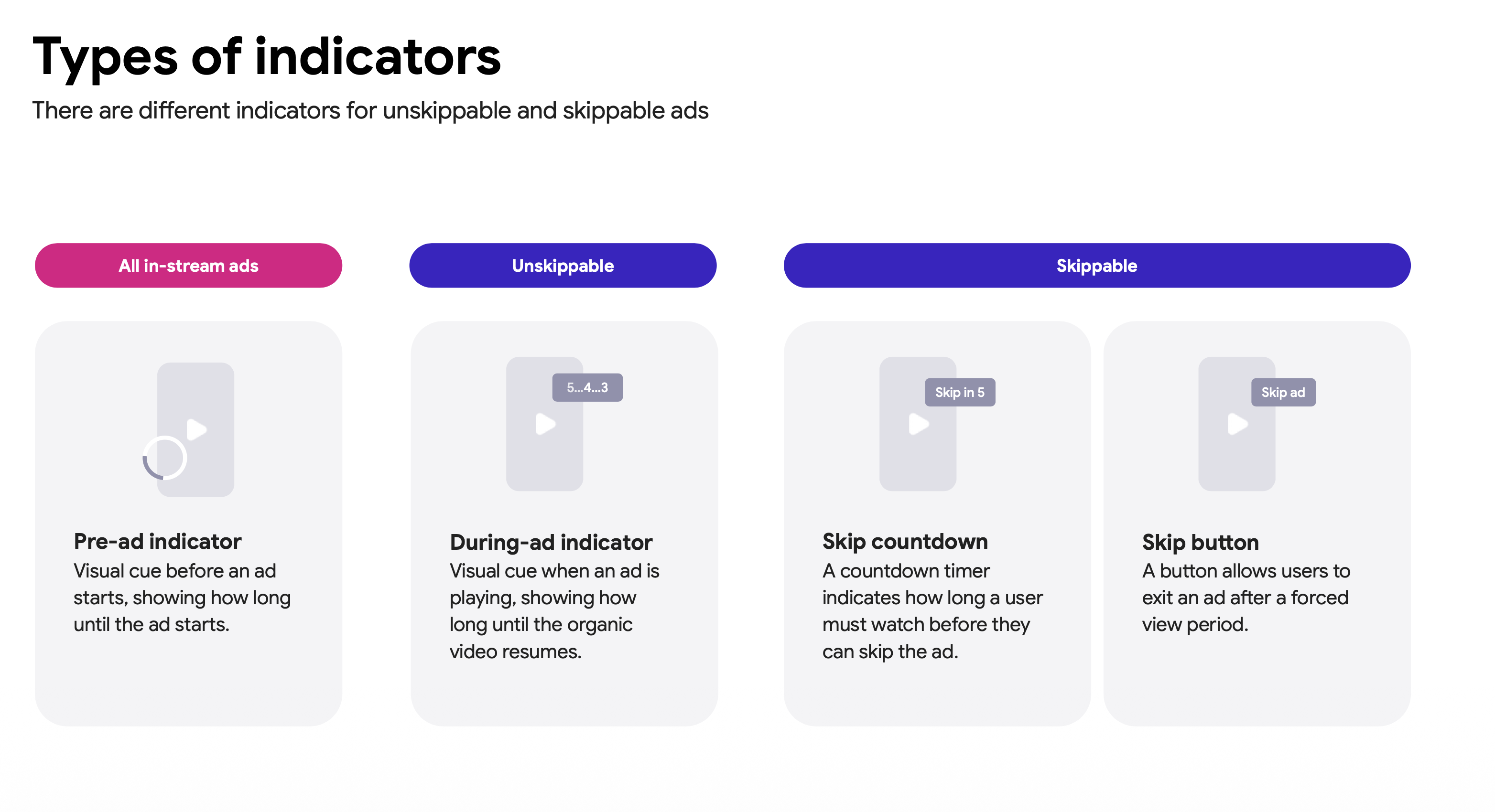
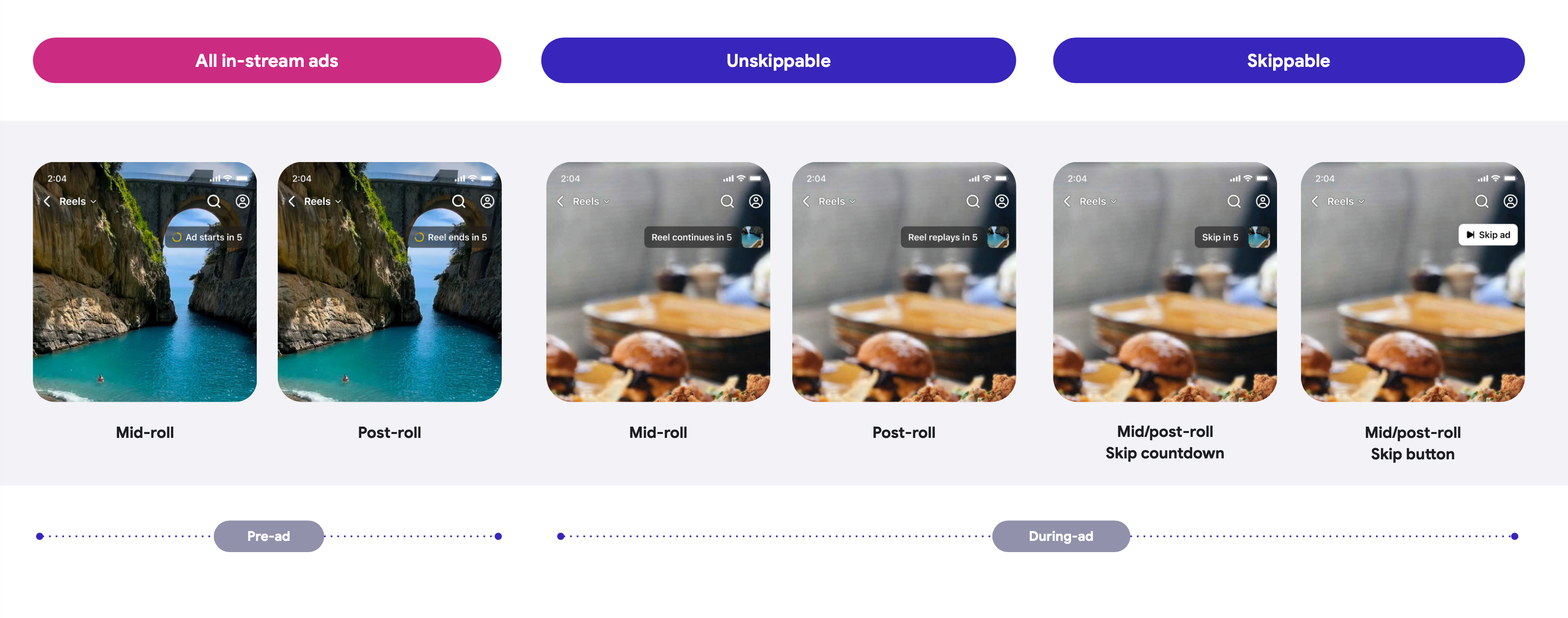
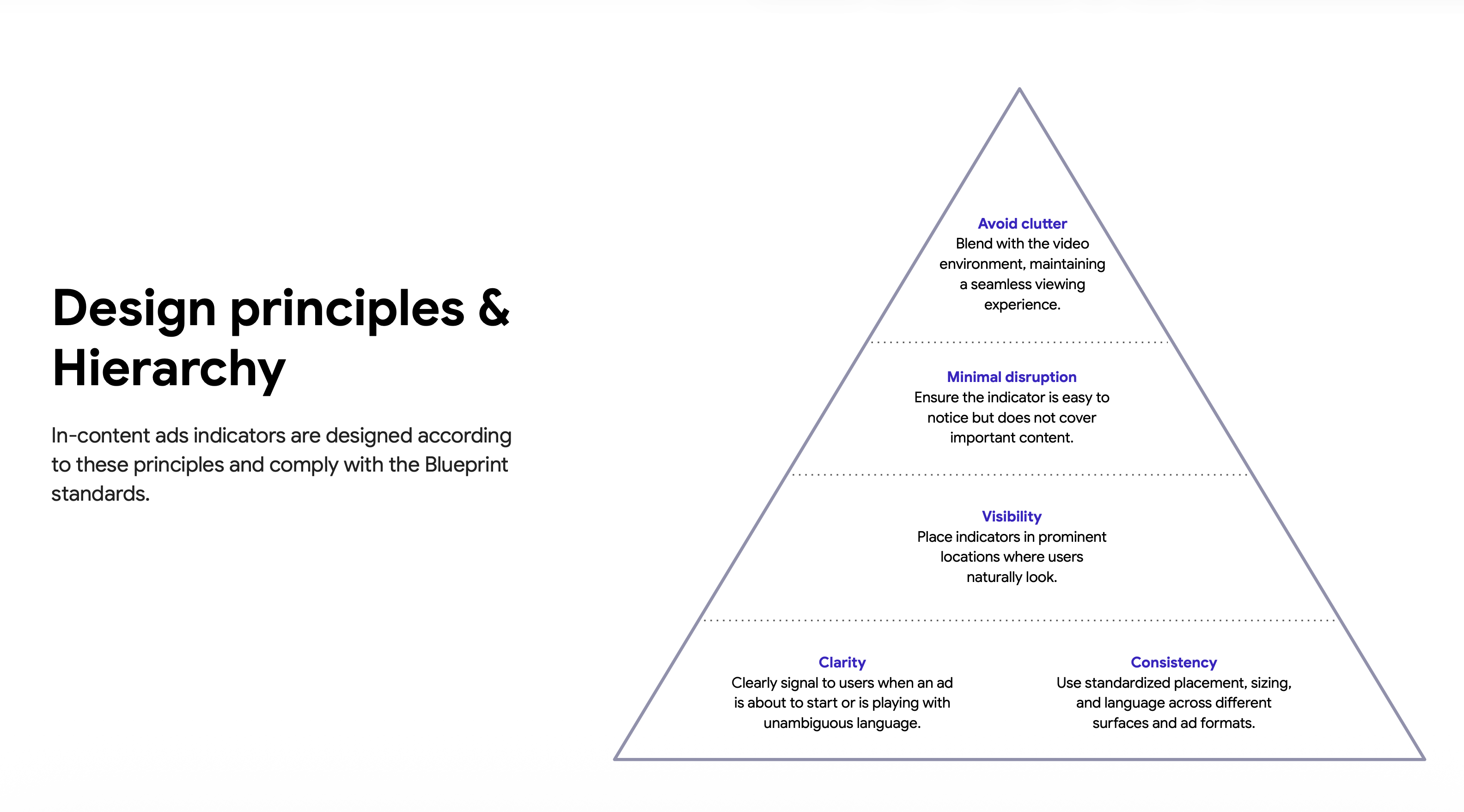
A unified indicator system aligns pre-ad and during-ad states across both skippable and non-skippable formats. By applying a single, coherent visual language to a complex multi-format problem, viewers always know where they are in the ad experience — reducing confusion and perceived disruption.

2. Deferred card design

The redesigned architecture optimizes the post-ad experience by relocating the layout, prioritizing interaction safety, and streamlining data presentation.

  • ·

    Elevated location: Anchors the card higher in the viewport, aligning with standard banner ad formats to improve visibility and utilize a familiar, recognizable layout.

  • ·

    Stable organic content: Keeps the underlying organic video and its metadata completely static in their original positions, eliminating the disruptive layout shifts that previously caused accidental dismissals while scrolling.

  • ·

    Scalable metadata control: Strips away secondary organic data points to declutter the UI, replacing tight text truncation with an internally scrollable container that handles rich marketing copy without expanding the global card footprint.

The iterations

Motion prototypes refining deferred card behavior — dynamic layout, CTA animation, and card transitions.

The transformation

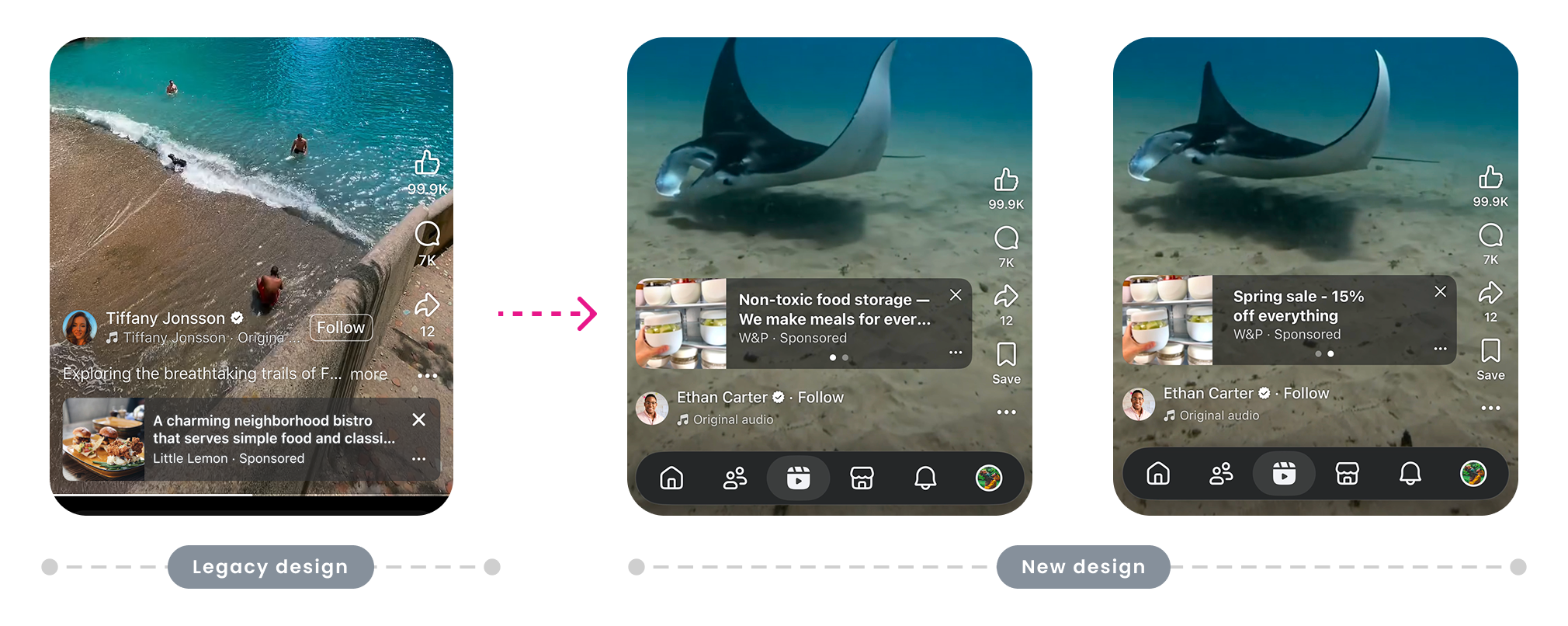
A direct comparison of the experience before and after the redesign, illustrating the improvement in consistency, clarity, and viewer experience across both ad formats.

Before
After

The outcomes

Indicator system

+0.15%
Total revenue lift
+3.05%
In-App Browser clicks
+1.86%
Conversion rate

Deferred card

+1.48%
Incremental revenue
-1.21%
Bounce rate
+1.47%
Conversion rate

Tested
concepts

Other explorations and alternative directions tested to improve in-stream ads revenue and viewer experience.

More work

Zillow
Concierge Web App
View case study →
Zillow
Builder Dashboard
View case study →
Meta · Facebook Monetization
End Frame System
View case study →